
{tocify} $title={Table of Contents}
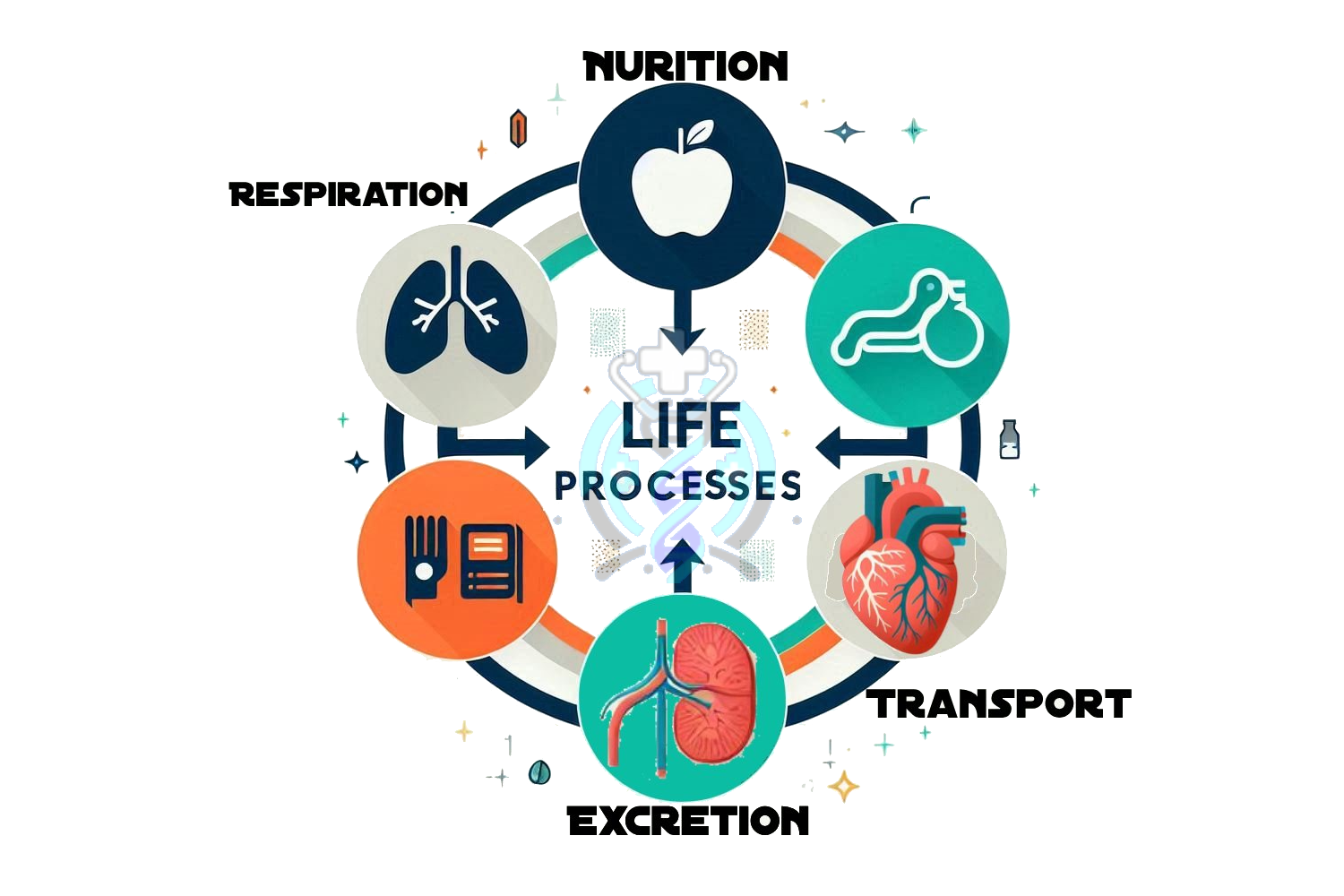
Life Processes
Life processes are the essential and basic actions (like eating, breathing, and cleaning waste) that all living organisms perform to maintain their life and existence, to stay alive and healthy, even when they are inactive. These crucial processes include Respiration(R), Excretion(E), Nutrition(N) and Transportation(T).
Respiration
The process of acquiring oxygen from outside the body and using it in the process of breakdown of food sources for cellular needs, is called respiration.
Excretion
The removal of metabolic waste products that could be toxic if accumulated. These waste products are carbon dioxide (exhaled), nitrogenous wastes (urea, uric acid), excess salts, and water; these are eliminated via lungs, kidneys, skin, or in plants through stomata.
Nutrition
The process by which organisms take in food (carbon‑based molecules) from their environment and break it down into simpler substances. These nutrients needed for maintenance, repair, growth, and chemical activity in every cell.
Mode of Nutrition
- Autotrophic
- Heterotrophic
Autotrophic nutrition is a mode of nutrition in which organisms prepare their own food using simple substances like carbon dioxide and water in the presence of sunlight. This process is mostly seen in green plants and some bacterias.
Heterotrophic nutrition is a mode of nutrition in which organisms cannot make their own food and depend on other plants or animals for their nutrition. They consume organic matter for energy and growth.
Transportation
The movement of dissolved substances, nutrients, gases (O₂/CO₂), hormones, and wastes throughout the body. In animals, this takes place via the circulatory system (blood, heart, vessels); in plants, via xylem (water/minerals) and phloem (sugars).